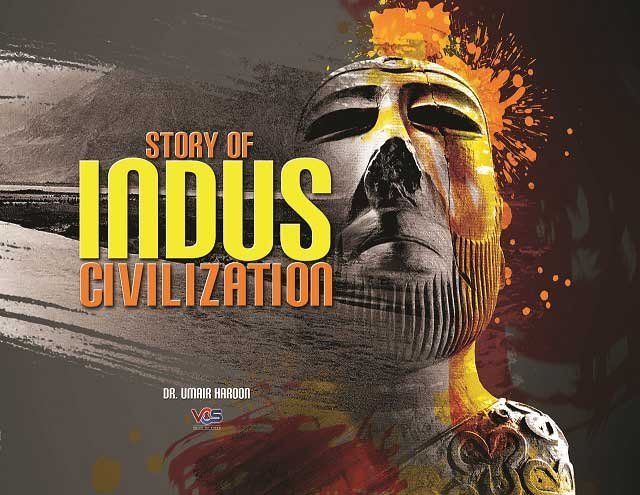
The book Story of Indus Civilization (ISBN 978-969-23550-0-1) is a captivating and deeply insightful exploration of Sindh – a region often regarded as the cradle of civilization and the cultural heart of the Indus Valley. Written by Dr Umair Haroon, Editor-in-Chief of Voice of Sindh, this book offers a sweeping narrative that combines history, spirituality, culture, and identity in a way that is both scholarly and accessible.

A Journey through Time: The book begins by taking readers deep into the prehistoric roots of Sindh, from early human settlements to the urban brilliance of Mohenjo-Daro, one of the crown jewels of the Harappan civilization. Dr Umair masterfully traces the evolution of the region through key historical moments: Alexander the Great’s invasion, the arrival of Islam under Muhammad bin Qasim, the rise and fall of medieval dynasties, the influence of the Mughal Empire, and the lasting impact of British colonial rule.
Each era is not merely presented as a sequence of events but as a transformative chapter in Sindh’s continuous shaping of South Asian history.
Culture, Spirituality, and the Sindhi Soul: What sets this work apart is its holistic approach. Dr Umair goes beyond political history to capture the soul of Sindh – its deep-rooted spirituality, cultural pluralism, and timeless traditions. The chapters on Sufism are especially powerful, presenting Sindh as a beacon of peace, love, and religious harmony. The book also brings to light the diverse religious fabric of the region, where Muslims, Hindus, Sikhs, and others have lived together for centuries in relative harmony.
Dr Umair explores the region’s rich artistic heritage, including its architecture, folk traditions, music, and poetry. He draws vivid pictures of local life through descriptions of Sindh’s cuisine, festivals, and vibrant crafts. The province’s economic and geographical importance is equally emphasized, with insights into trade routes, agriculture, and scenic treasures such as Gorakh Hill and wildlife sanctuaries.
The recognition of Sindh as the birthplace of Quaid-e-Azam Muhammad Ali Jinnah adds a powerful national dimension, linking the province’s legacy to the formation of modern Pakistan.
Dynasties That Shaped Sindh: A particularly notable strength of the book is its in-depth exploration of the dynasties that ruled Sindh and contributed to its cultural and political landscape. These include:
* Habbarid Dynasty (9th-10th century)
* Soomra Dynasty (1024-1351)
* Samma Dynasty (1351-1524)
* Arghun Dynasty (1520-1554)
* Turkhan Dynasty (1554-1591)
* Kalhora Dynasty (1701-1783)
* Talpur Dynasty (1783-1843)
Rather than offering a dry list of rulers and dates, Dr Umair highlights each dynasty’s impact – from infrastructure and city development to religious patronage and governance. These chapters reveal how Sindh evolved as a diverse, inclusive, and resilient society over the centuries.
An Important Contribution to Historical Literature: Dr Umair’s style is both eloquent and grounded in rigorous research. He presents history as a living narrative, connecting past to present with clarity and emotion. His ability to balance academic integrity with engaging storytelling makes the book accessible to both scholars and general readers.
Importantly, The Story of Indus Civilization reflects an original and comprehensive synthesis of Sindh’s archaeological, cultural, and historical dimensions, addressing a gap in existing scholarship. The nuanced integration of political history with spiritual and cultural insights underscores Dr Umair’s distinct voice and unique contribution to the field, reaffirming Sindh’s pivotal role within South Asian studies.
Conclusion: The Story of Indus Civilization is not just a book – it is a tribute to a land where humanity, faith, and history have walked hand in hand for thousands of years. Through its pages, readers are invited to rediscover the richness of Sindh, appreciate its contributions, and understand its ongoing relevance in shaping Pakistan’s past, present, and future.
Whether you are a student, academic, or simply a curious reader, this book offers both knowledge and inspiration. Dr Umair has crafted a powerful and lasting contribution to the cultural and intellectual heritage of Pakistan.
The post The story of Indus Civilization by Dr. Umair Haroon appeared first on The Financial Daily.