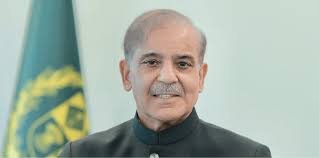
In a bid to provide relief to Karachi’s residents and industrial sectors grappling with soaring power tariffs, Sindh Energy Minister Syed Nasir Hussain Shah on Tuesday announced a new electricity supply framework under the Sindh Electric Power Regulatory Authority (SEPRA).
Speaking to the media, he revealed that electricity will be generated and transmitted by the Sindh Transmission and Dispatch Company (STDC) under the recently approved SEPRA. Shah stated that the rates offered under SEPRA will be substantially lower than those currently charged by K-Electric.
“We will generate electricity ourselves and transmit it through STDC. Most importantly, we will determine the tariff ourselves,” he said, adding, “The electricity transmitted through STDC will not be subject to NEPRA’s pricing. Our rates will be significantly more affordable.”
Also Read: Bilawal dismisses 27th Constitutional Amendment rumours as ‘baseless’
The minister confirmed that the SEPRA framework has been constitutionally approved by the Sindh Assembly, and staffing for the authority is already complete. A formal notification is expected later this month.
“Our primary focus is on providing reliable and low-cost electricity to Karachi’s economic zones,” Shah emphasised. “We aim to deliver SEPRA’s first transmission to the grid supplying power to the Korangi industrial area.”
He further asserted that the transmission infrastructure must be under STDC’s control for the plan to succeed. “Karachi’s citizens will also benefit from this initiative once the system is in place,” he added.
Also Read: Pakistan wins water arbitration against India
Commenting on K-Electric’s governance structure, Shah pointed out the lack of provincial representation on its board. “Currently, all three board directors represent the federal government. We have proposed that one director remain from the federal side, while the other two should represent Sindh,” he said.
The minister also mentioned an agreement between the Sindh government and K-Electric to supply the utility with low-cost electricity from upcoming solar parks. “We’ve asked K-Electric to avoid purchasing electricity generated through expensive fuel when solar-based power is available,” he said.
K-Electric currently depends on the National Electric Power Regulatory Authority (NEPRA) for tariff determination and price notifications, even as it faces mounting criticism over rising electricity costs and persistent load-shedding.
While announcing a new provincial power initiative, Shah did not provide specifics on the tariff structure or generation mechanism under SEPRA.
Also Read: ATC orders Qureshi’s release after acquittal
According to NEPRA’s data, Pakistan’s power generation continues to lean heavily on costly imported fuels. Over 20% of electricity was generated using imported liquefied natural gas (LNG), at a steep cost of Rs24.26 per unit. Similarly, electricity from imported coal came in at Rs16.60 per unit.
Hydroelectric and nuclear sources offered some relief—contributing 21.94% and 17.91% to the power mix respectively—at significantly lower costs. Nuclear power, in particular, stood out as the cheapest source at just Rs2.10 per unit. However, these affordable options were not enough to offset the impact of more expensive fuel-based generation.
Locally sourced coal accounted for 14.51% of power generation at Rs11.21 per unit, while gas-based power made up 8% at Rs11.82 per unit. Though furnace oil contributed just 0.79% to the national grid, it remained the most expensive source, costing Rs28.77 per unit.