Prime Minister Shehbaz Sharif’s address to the 80th session of the United Nations General Assembly was one of the most comprehensive and assertive speeches by a Pakistani leader in recent years. Speaking before the 193-member world body, the Prime Minister touched on all the critical issues that define Pakistan’s national interests and regional concerns-Kashmir, Palestine, terrorism, Afghanistan, climate change, water rights, and the broader challenges of an unstable world order.
At the heart of his speech was Pakistan’s consistent demand for peace through dialogue. He emphasized that Pakistan believes in diplomacy and the peaceful settlement of disputes. Yet, this vision was framed against the backdrop of the recent war with India, where Pakistan confronted “unprovoked aggression” from its eastern neighbor in May. Shehbaz Sharif’s reminder that he had warned, from the same UN podium last year, that Pakistan would act decisively against aggression, carried a strong sense of continuity and resolve. His description of the conflict-Pakistan’s armed forces under Field Marshal Syed Asim Munir’s command, downing seven Indian jets, and sending back the aggressor “in humiliation”-was a stark message that while Pakistan is committed to peace, it will never compromise on its sovereignty or security.
The Prime Minister also touched upon the human dimension of war. His tribute to the officers, soldiers, and martyrs, and his evocative reference to the unity of the Pakistani people standing as a “Bunyan Um Marsoos” (an unbreakable wall), was both a reminder of the sacrifices made and an assertion of national solidarity. Yet, even after celebrating what he described as a military victory, Shehbaz Sharif pivoted toward reconciliation: “We have won the war and now we seek to win peace.” By offering a comprehensive, result-oriented dialogue with India, he positioned Pakistan as a responsible power willing to transform a battlefield victory into a diplomatic opportunity. His call for South Asia to be led by “proactive rather than provocative” leadership was a direct challenge to India but also a constructive invitation to reset the region’s trajectory.
The Prime Minister’s acknowledgment of President Donald Trump’s timely intervention, which facilitated a ceasefire and prevented the war from spiraling into a full-scale nuclear conflict, was striking. By nominating Trump for the Nobel Peace Prize, Shehbaz Sharif underscored Pakistan’s appreciation for global mediation in times of peril. While some may debate the appropriateness of such a gesture, the message was clear: Pakistan values those who help avert catastrophe and support peace. Equally significant was his recognition of the diplomatic support extended by China, Turkiye, Saudi Arabia, Qatar, Azerbaijan, Iran, and the UAE, demonstrating the breadth of Pakistan’s partnerships and the importance of multilateralism in addressing global crises.
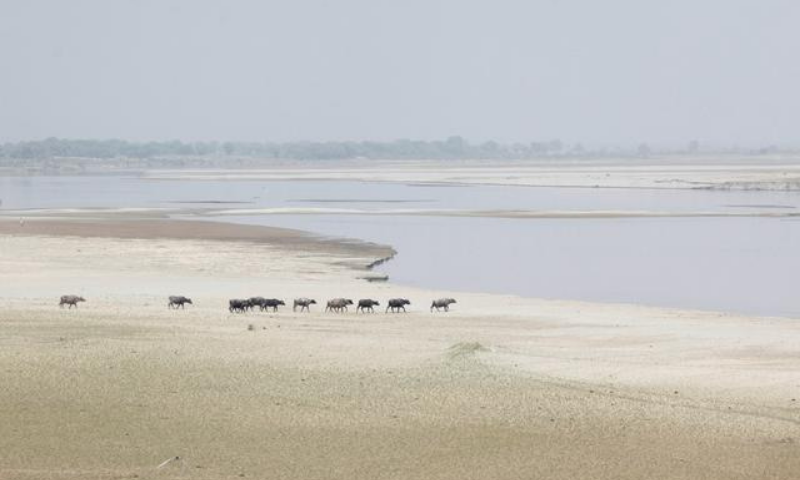
Another critical dimension of the speech was water security. By declaring that any violation of the Indus Waters Treaty would be treated as an act of war, the Prime Minister elevated the issue to the highest level of national security. This warning reflected Pakistan’s deep anxieties over India’s unilateral attempts to alter the treaty, which guarantees Pakistan’s rights over its rivers. With a population of 240 million relying on these waters, Shehbaz Sharif’s uncompromising tone was intended to leave no ambiguity: Pakistan will defend its lifeline at all costs.
The plight of Kashmiris was also at the core of the Prime Minister’s speech. He reminded the world that India had for nearly eight decades sought to silence their voices through occupation, repression, and denial of fundamental rights. Yet, he assured the people of Kashmir that Pakistan remains steadfast in its support, confident that one day India’s tyranny will end. His reaffirmation of the right to self-determination through a UN-supervised plebiscite aligned Pakistan’s position with international law and UN resolutions, keeping alive the central demand of the Kashmiri struggle.
The Prime Minister also highlighted the human rights crisis in Palestine, linking it with Kashmir as parallel struggles for justice, dignity, and self-determination. By condemning terrorism in all its forms while simultaneously exposing state violence and illegal occupation, he sought to place Pakistan firmly on the side of international legality and humanitarian values.
Equally important was his broader reflection on global challenges: climate change, arms races, emerging technologies, and disinformation. These issues, though often overshadowed by regional disputes, shape the security and survival of nations. By raising them, Shehbaz Sharif demonstrated that Pakistan’s outlook is not narrow or parochial, but one that sees its destiny linked to global peace, cooperation, and resilience.
In the end, the speech was both a warning and an offer. The warning was clear: Pakistan will defend itself against aggression, safeguard its water rights, and resist occupation in Kashmir. The offer was equally clear: Pakistan stands ready for dialogue, diplomacy, and constructive cooperation. Whether the world chooses to heed this call remains uncertain, but for Pakistan, the message delivered at the UNGA was resolute-this nation seeks peace, but not at the cost of dignity, sovereignty, or justice.
The post Pakistan’s voice at the United Nations appeared first on The Financial Daily.