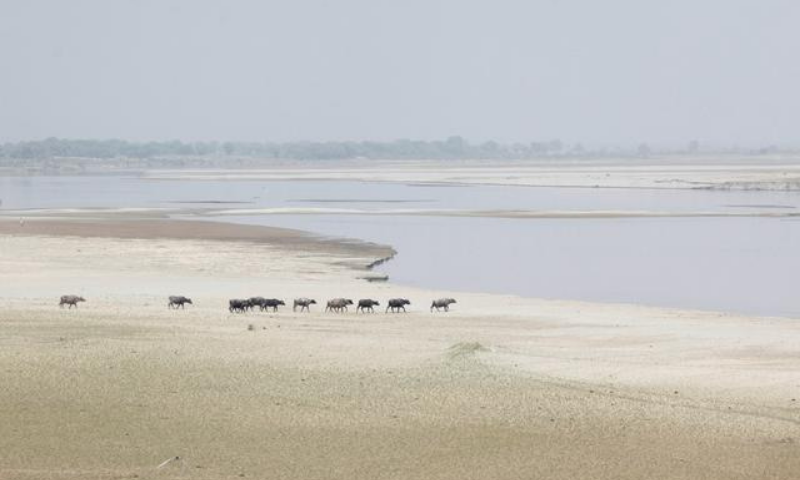
Pakistan is an agricultural country whose economy heavily depends on water. The River Indus and its tributaries not only irrigate fields but also serve as the backbone for industries, energy production, and household needs. Unfortunately, Pakistan is facing a severe water crisis. According to international reports, Pakistan is among those countries that may face acute water scarcity in the near future. In such circumstances, the construction of large water reservoirs has become unavoidable to store rainwater and glacier melt. Among these projects, the most debated one is the Kalabagh Dam, which has remained a victim of political controversies for decades.
The Kalabagh Dam project was first proposed in the 1950s. Experts from WAPDA and engineering specialists chose this site because the width and depth of the River Indus near Kalabagh were suitable for water storage. In 1984, the government of Pakistan formally approved the project. Its expected capacity was to store 6.1 million acre-feet of water and generate about 3,500 megawatts of electricity. At the same time, the dam could help prevent river erosion, control floodwaters, and ensure a reliable supply of water for agriculture.
Experts have always emphasized the benefits of this project. According to them, the Kalabagh Dam could become the backbone of Pakistan’s economy. It would not only produce cheap and eco-friendly electricity but also irrigate millions of acres of land. Every year, floods cause billions of rupees in losses to the country; the construction of this dam could help reduce such damages. In addition, the project would support industrial and agricultural development, create new job opportunities, and reduce Pakistan’s dependence on imported fuel.
In recent years, Pakistan has faced severe climate fluctuations. Sometimes, there are extraordinary rains and devastating floods, while at other times, the country suffers from drought and water shortages. Experts believe that due to climate change, glaciers are melting rapidly, which will cause serious imbalances in river flows in the future. Against this backdrop, projects like Kalabagh Dam would not only help in storing water but also play an important role in reducing the impacts of climatic extremes. This dam could provide water during drought and control torrential floods caused by heavy rains and glacier melting. Thus, the project is also a significant defensive barrier against climate change.
Although experts and many stakeholders agree on the benefits of Kalabagh Dam, its construction has always been entangled in political controversies. Khyber Pakhtunkhwa fears that the dam would submerge Nowshera and surrounding areas, forcing people to lose their homes and lands. In Sindh, there is a perception that the dam would reduce their share of water, diverting more of the Indus to upper Punjab and other areas. Balochistan complains that it has already been deprived of its fair share in existing water projects and therefore sees Kalabagh Dam as another source of neglect.
Water distribution has always been a sensitive issue in Pakistan. Despite the 1991 Water Accord, suspicions and mistrust among provinces have not ended. Some circles view Kalabagh Dam as a symbol of Punjab’s dominance, which is why the project faces strong political opposition. On the other hand, successive governments have always discussed it but refrained from taking practical steps. The fear was that any government attempting to build Kalabagh Dam would face political backlash at the provincial level. As a result, despite being a national need, the project has remained buried in files and never took practical shape.
Water resource and engineering experts continue to advocate strongly for the project. They argue that Kalabagh Dam is technically safe and feasible. With modern technology, Nowshera and other potentially affected areas could be protected, while Sindh’s concerns could be addressed through improved administrative systems and water-sharing agreements.
Pakistan today is among the weakest countries in the region in terms of per capita water availability. According to global institutions, if Pakistan does not immediately build large reservoirs, it will face extreme water shortages in the coming years. The energy crisis is already burdening the economy, and due to costly electricity, both industry and agriculture are suffering. Under such circumstances, the importance of Kalabagh Dam increases even further.
The biggest obstacle to Kalabagh Dam’s construction is the lack of political trust. If the provinces are taken into confidence, a transparent and effective water policy is developed, and the public is made aware of the real benefits of the project, then national consensus can be achieved. This project is not for any single province but for the future of the entire country. Therefore, what is needed is unity instead of division.
The story of Kalabagh Dam is a tragedy in Pakistan’s political history. A project that could save the country from energy shortages and water scarcity has been stalled only due to provincial disputes and political interests. If we do not resolve this issue wisely, putting national interest above all else, future generations will suffer from extreme water scarcity. The time has come for national leadership to rise above provincial and personal interests and make decisions for the future of Pakistan. Kalabagh Dam is not just a dam-it is a project of survival for Pakistan.
The post Kalabagh Dam – a national necessity and political disputes appeared first on The Financial Daily.