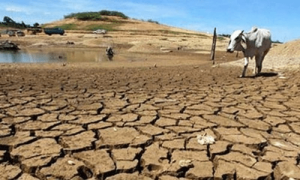
Poverty in Pakistan has reached distressing proportions. In 2025, under the World Bank’s new international poverty threshold of US$4.20 per person per day, approximately 44.7% of the population falls below the poverty line. At the same time, extreme poverty-living on less than US$3 per day-afflicts about 16.5% of people, nearly 40 million individuals.
Meanwhile, per-capita income has been under severe strain. During fiscal year 2022-23, Pakistan’s per capita income dropped by about 11.38%, reaching approximately US$1,568. This decline is a stark reminder that many households are not just poor by international standards, but that their income is losing purchasing power and stability.
Geographically, the hardship is uneven. The poorest districts-such as Washuk in Balochistan, with a poverty headcount rate of 72.5%-stand in stark contrast to districts like Abbottabad, whose poverty rate is just 5.8%. Rural areas in Punjab, Sindh, Balochistan, and Khyber Pakhtunkhwa suffer from weak infrastructure, limited access to clean water, education, electricity and healthcare-factors which both cause poverty and magnify its effects.
Why Islamic Finance Matters: Islamic finance, guided by principles of fairness, risk-sharing, avoidance of exploitation (riba), and social welfare, offers tools especially suited to address poverty in a way that is both effective and morally grounded. Key amongst these are:
Interest-free or low-profit microfinance (Qard, Qard Hasan, Murabaha under cost-plus, etc.), which can provide capital to the poor without the burden of usurious interest.
Profit and loss sharing (Musharaka, Mudaraba) models that align incentives between investors and entrepreneurs, reducing the risk of indebtedness.
Takaful (Islamic insurance), to mitigate the hardships caused by health shocks, disasters, or other losses, without involvement in non-Islamic insurance models that may include forbidden (haram) elements.
Zakat, Sadaqah, and Awqaf (endowments)-already significant in Pakistan’s social safety-net tradition-that can be mobilised more systematically, with better governance and targeting, to reach the poorest of the poor.
Pakistan already has several promising programmes and institutions: Pakistan Poverty Alleviation Fund (PPAF): has long worked to provide microfinance, community-led development, and institutional support to vulnerable populations.
Akhuwat Islamic Microfinance: offers interest-free (Qard Hasan) loans to people usually excluded by mainstream lenders, helping them start small businesses, purchase tools or livestock, etc.
Ehsaas Programme: a large-scale government initiative that combines cash transfers, health-and-education support, and other welfare services.
Zakat and Awqaf Departments: traditional Islamic institutions involved in welfare, but often challenged by inefficiencies, uneven reach, and governance issues.
These efforts have had real positive impacts: improving household resilience, enabling small entrepreneurs, increasing school enrolments, and reducing vulnerability in crisis times. But they are insufficient in scale and coherence given current needs.
What Needs to Be Done: A Comprehensive Strategy: To significantly reduce poverty in Pakistan-both in depth (extreme poverty) and breadth (vulnerability)-a multi-pronged, human-centred strategy rooted in Islamic finance can be effective. Key pillars:
Scale up Islamic microfinance: Increase availability of interest-free or low profit-margin micro-loans, especially in rural and underserved districts.
Simplify collateral requirements; reduce bureaucracy; partner with local community organisations.
Embed financial education so recipients understand both risks and opportunities.
Support entrepreneurship and skills: Provide training, mentorship, and access to markets for artisans, small-scale farmers, and women entrepreneurs.
Use Musharaka/Mudaraba contracts where investors share risk and reward with local entrepreneurs.
Innovate financial inclusion: Introduce mobile Islamic banking services, micro-Takaful products, savings instruments compliant with Sharia, etc.
Leverage digital platforms to reach remote regions, reducing transaction costs.
Strengthen Zakat, Sadaqah, and Awqaf governance: Ensure transparent, accountable management of funds.
Mapping of need: using data (poverty surveys) to target the most deprived districts and communities.
Engage local communities to participate in decision-making – to ensure funds are used in culturally appropriate and practically helpful ways.
Policy & Government role: Develop a coherent Islamic finance policy framework, supporting microfinance, Takaful, and alternative financing models.
Budgetary allocations: ensuring sufficient, predictable funding for poverty alleviation programmes.
Inter-agency coordination: between finance, economic planning, social welfare, religious affairs ministries, and local governments.
Monitoring & evaluation: regular surveys (Household Income and Expenditure Surveys, etc.), impact assessments to adjust programmes as necessary.
Resilience to shocks: Strengthen safety nets for floods, inflation, health crises. COVID-19, climate shocks, macroeconomic volatility all threaten to push vulnerable people back into poverty.
Ensure that Islamic finance tools include protection (Takaful, emergency funds, community savings clubs) that can be mobilised swiftly.
Challenges & Cautions: Implementing such a strategy has challenges:
Data gaps and lags: many estimates are based on outdated survey data (e.g. HIES 2018-19).
Inflation and currency depreciation eroding purchasing power even where incomes analytically increase.
Awareness and trust: many poor households may not be familiar with Islamic finance instruments, or may mistrust financial institutions.
Regulatory oversight and governance: ensuring transparency and avoiding leakage of funds or misuse.
Scalability: bringing small programmes to scale without loss of quality or mission drift.
Looking Ahead: If Pakistan pursues a deliberate strategy combining Islamic finance tools, social welfare, and strong governance, there is cause for cautious optimism. Reversing the slide in per capita income (which stood at about US$1,568 in 2022-23) and shrinking both general and extreme poverty will require sustained effort-but it is possible.
Efforts in other Muslim-majority countries have shown that where microfinance, Zakat, and ethical financial products are properly structured, poverty can be reduced not only in terms of income but in enhancing dignity, health, education and long-term opportunity.
Conclusion: Eradicating poverty in Pakistan is more than economic arithmetic-it is a moral imperative. Islamic finance gives both the ethical framework and practical instruments to do more than mitigate suffering: to empower people, strengthen communities, and build equitable opportunity. As Pakistan contends with inflation, inequality, economic headwinds and climate pressures, a comprehensive, human-centred strategy rooted in Islamic principles could make povert alleviation not merely a policy goal, but a shared transformation.
The post Islamic finance and poverty alleviation in Pakistan: A compassionate, comprehensive strategy appeared first on The Financial Daily.